
Blog
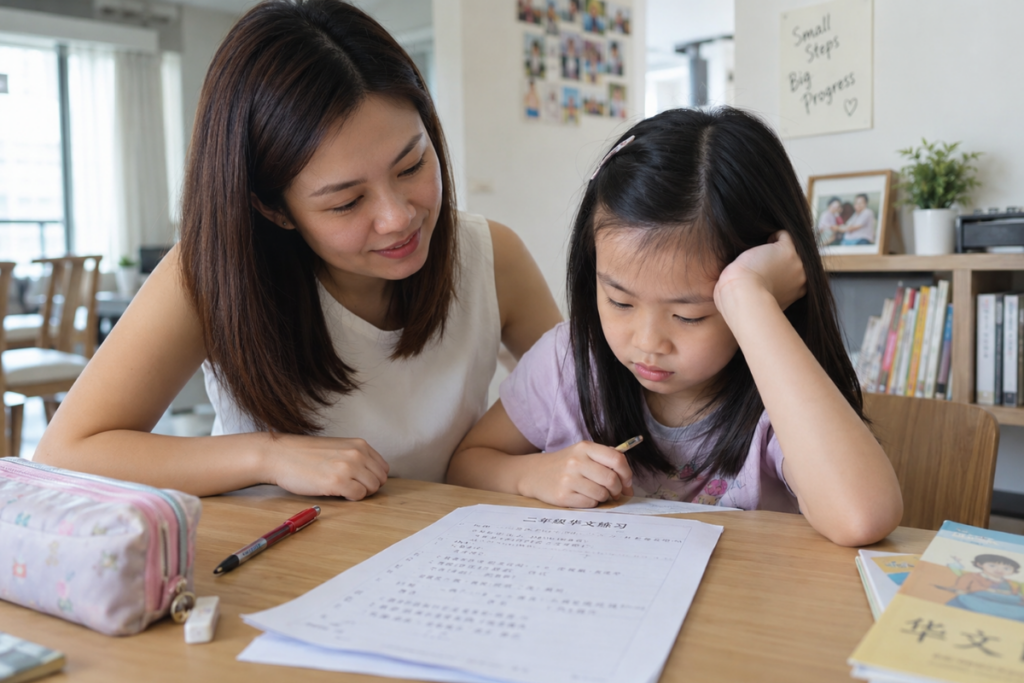
Many parents notice a change when their child moves from Primary 2 to Primary 3. In P1 and P2, Chinese may still feel manageable. The child learns vocabulary, practises spelling, reads shorter passages, and writes simple sentences. Even if the child is not very strong in Chinese, they may still be able to cope by memorising words and following examples. But in Primary 3, things start to feel different. The child is expected to read longer sentences.They need to write more on their own.Comprehension questions need fuller answers.Composition requires sequence and details.Oral answers cannot be too short.Vocabulary must be used correctly, not just recognised. This is why many parents start searching for Primary 3 Chinese tuition. Not because the child suddenly became lazy, but because the demand has changed. For many children, P3 is the year Chinese moves from: “I can recognise the word”to“I must know how to use the word.” That is a very big jump. Why P3 Chinese Feels Harder Than P2 Chinese Suggested photo: Side-by-side visual: P2 simple sentence vs P3 fuller paragraph. In P2, many children can still survive with short answers and simple sentences. For example: 小明去公园。小明很开心。妈妈买了食物。 These sentences are simple, and for lower primary, they may still be acceptable. But in P3, students are expected to connect ideas more clearly. Instead of only writing: 小明去公园。小明放风筝。小明很开心。 They may need to write something like: 星期天,天气晴朗,小明和家人一起到公园野餐。吃完午餐后,他兴致勃勃地在草地上放风筝,看着风筝越飞越高,他开心极了。 This does not mean P3 students must suddenly write very difficult Chinese. But they need to learn how to expand ideas. That is often where weaker or English-speaking students start to struggle. They may have ideas, but they do not know how to turn those ideas into proper Chinese sentences. Struggle 1: Knowing the Word But Not Knowing How to Use It Many children memorise vocabulary for spelling. They may be able to recognise the word when they see it. But using the word in a sentence is different. For example, a child may know the word: 愉快 But when asked to use it, they may write: 我很愉快。 This is understandable, but it does not sound natural. A better sentence would be: 我们度过了愉快的一天。 Another example: The child may know the phrase: 津津有味 But writes: 他们很津津有味。 A better sentence is: 他们津津有味地谈天。 This is the difference between memorising and applying. Many P3 students are not “bad at Chinese”. They simply need to learn how words are used in real sentences. Parent tip:When your child learns a new word, do not stop at meaning. Ask: “Can you use it in a full sentence?” Then check whether the sentence sounds natural. Struggle 2: English Sentence Order Appears in Chinese Writing For children from English-speaking homes, one common issue is direct translation. The child may think in English first, then translate word by word into Chinese. For example, the child wants to say: “Xiao Ming ate in the canteen.” They may write: 小明吃饭在食堂。 The meaning is understandable, but the order follows English. In Chinese, the place usually comes before the action: 小明在食堂吃饭。 Another example: English idea: “They had a happy day.” A child may write: 他们有一个开心的天。 A better sentence is: 他们度过了愉快的一天。 This is a common P3 transition problem. The child has the idea.The child may even know the words.But the Chinese sentence structure is not natural yet. This affects composition, oral, and even comprehension open-ended answers. Parent tip:When your child writes an awkward sentence, ask: “What are you trying to say in English?” Then help them build the Chinese sentence in parts: Who?Where?Did what?How did they feel? Struggle 3: From One-Line Answers to Complete Answers In P3, comprehension questions also become more demanding. Some children understand the passage but still lose marks because their answers are too short. For example, the question asks: 为什么小明不敢告诉妈妈真相? A weak answer may be: 因为他害怕。 This gives a feeling, but not the full reason. A better answer would be: 因为他担心妈妈知道真相后会责备他,所以不敢告诉妈妈。 The child did not necessarily fail to understand the passage. The problem is that the answer is incomplete. This is a very important P3 skill. Students need to learn that Chinese comprehension is not only about finding the answer. They must also express the answer fully. Parent tip:For 为什么 questions, teach your child to check: Did I explain the reason clearly?Did I only write the feeling?Can I add “因为……所以……” to make the answer complete? Struggle 4: Composition Is No Longer Just Writing What You See In lower primary, many children write picture composition by describing each picture simply. Picture 1: What happened?Picture 2: What happened next?Picture 3: What happened next?Picture 4: What happened at the end? But in P3, writing only what is seen may not be enough. A child may write: 小明去公园。小明放风筝。风筝飞走了。小明很伤心。 This tells us what happened, but the story feels flat. A better composition needs: when and where the story happened who was involved what problem happened how the character reacted how the problem was solved what the character learnt or felt For example: 星期天早上,天气晴朗,小明兴致勃勃地到公园放风筝。突然,一阵强风吹来,风筝被吹到树上。小明急得不知所措,幸好一位叔叔看见了,主动帮他把风筝取下来。小明连忙向叔叔道谢,也明白了遇到困难时要冷静想办法。 This is not just “better Chinese”. It has clearer story development. That is what many P3 students need to learn. A Simple Home Practice: Word → Sentence → Better Sentence Parents do not need to spend one hour every day. A simple 10-minute practice can help. Choose one word from your child’s schoolwork. Example: 公园 Step 1: Make a simple sentence 小明去公园。 Step 2: Add time or weather 星期天,天气晴朗,小明去公园。 Step 3: Add who and what he did 星期天,天气晴朗,小明和家人一起到公园野餐。 Step 4: Add feeling 星期天,天气晴朗,小明和家人一起到公园野餐,大家都十分开心。 This method helps your child see that writing is not magic. A sentence can be built step by step. You can do the same with any word: 食堂操场朋友帮忙后悔紧张 The goal is not to memorise a model answer. The goal is to help the child learn how to build a better sentence. What Parents Can Watch Out For in P3 Your child may need more support if you notice these signs: ☐ They can memorise spelling but cannot use the words in sentences.☐ They write Chinese sentences using English order.☐ Their composition is a list of actions with little detail.☐ Their

Many students can recognise Chinese words, but still read them inaccurately during oral practice. Very often, the issue is not that they “don’t know the word”. The problem is that some Chinese words change pronunciation in different words or sentence contexts. For PSLE Oral, this matters because good reading is not only about fluency. Students also need to pay attention to: 多音字 — words with more than one pronunciation 轻声 — words that should be read lightly 常见误读音 — common words students often read wrongly Below are three short practice sentences that help students notice these common reading traps. Practice Sentence 1 这个公共场所不但地方宽敞,还提供许多方便居民的设施。 View reading example here. Word Correct Reading Common Mistake What to Note 公共场所 gōng gòng chǎng suǒ 公共 chǎng suǒ read too flat Read each word clearly. This is a common oral theme phrase. 地方 dì fang dì fāng 方 is usually read softly here. 提供 tí gōng tí gòng 供 is first tone here. 方便 fāng biàn fáng biàn / fāng bian Read both syllables clearly. 设施 shè shī shè sì 施 is shī, not sì. Reading Tip Group the sentence like this: 这个公共场所|不但地方宽敞|还提供许多|方便居民的设施。 This helps the child avoid reading word by word. Practice Sentence 2 妹妹一觉醒来,发现自己的眼睛红红的,觉得很不舒服,便连忙告诉妈妈。 View reading example here. Word Correct Reading Common Mistake What to Note 妹妹 mèi mei mèi mèi The second 妹 is 轻声. 一觉 yí jiào yì jué Here, 觉 means “sleep”, so it is read jiào. 发现 fā xiàn fà xiàn 发 is first tone here. 眼睛 yǎn jing yǎn jīng 睛 is 轻声. 觉得 jué de jué dé 得 is 轻声 here. 妈妈 mā ma mā mā The second 妈 is 轻声. Reading Tip Group the sentence like this: 妹妹一觉醒来|发现自己的眼睛红红的|觉得很不舒服|便连忙告诉妈妈。 This sentence is very useful for practising 轻声 because it includes 妹妹、眼睛、觉得、妈妈. Practice Sentence 3 姐姐尽力把资料整理好,妈妈也说会尽量陪她到办事处处理这件事。 View reading example here. Word Correct Reading Common Mistake What to Note 姐姐 jiě jie jiě jiě The second 姐 is 轻声. 尽力 jìn lì jǐn lì In 尽力, 尽 is read jìn. 尽量 jǐn liàng jìn liàng In 尽量, 尽 is read jǐn. 资料 zī liào zhī liào 资 is zī. 办事处 bàn shì chù bàn shì chǔ 处 is read chù here. 处理 chǔ lǐ chù lǐ In 处理, 处 is read chǔ. Reading Tip Group the sentence like this: 姐姐尽力把资料整理好|妈妈也说会尽量陪她|到办事处处理这件事。 This sentence is especially good for practising 多音字: 尽力 = jìn lì 尽量 = jǐn liàng 办事处 = chù 处理 = chǔ Same character, different pronunciation. Why These Sentences Are Useful When children practise oral reading, many parents ask them to read long passages again and again. That is helpful, but sometimes the child keeps repeating the same pronunciation mistakes. A better way is to pause and focus on short sentences that contain high-frequency tricky words. These three sentences help children practise: Skill Examples 轻声 妹妹、姐姐、妈妈、眼睛、觉得、地方 多音字 尽力、尽量、办事处、处理、一觉 Common oral vocabulary 公共场所、提供、设施、资料、居民 Sentence flow Reading in meaningful groups instead of word by word How Parents Can Practise at Home You do not need a long session. Try this simple method: Let your child listen to the sentence once. Ask your child to read it aloud. Pick only 2 or 3 words to correct. Read the sentence again with proper pauses. Record and listen back. For example, in this sentence: 妹妹一觉醒来,发现自己的眼睛红红的,觉得很不舒服,便连忙告诉妈妈。 Do not correct everything at once. Start with: 一觉 = yí jiào 眼睛 = yǎn jing 觉得 = jué de Once these are stable, then work on the full sentence flow. Final Reminder For PSLE Oral, students do not just need to read loudly. They need to read accurately and naturally. Small pronunciation mistakes can affect the overall impression of their reading. The good news is: many of these mistakes are predictable. When students learn to notice 多音字, 轻声, and common reading traps, their oral reading becomes much clearer and more confident. Small words. Correct tones. Better oral reading. Not sure why your child is struggling with Chinese? Start by identifying the real gap. At Chinese Is Easy, we help students understand where they are losing marks and guide them with clear explanations, bilingual support, and structured exam strategies. A good first step is to review your child’s recent Chinese work and find out what is really holding them back. FAQ What type of Chinese tuition is suitable for weak students? Weak students usually need tuition that explains clearly, identifies their gaps, and teaches step-by-step strategies. More worksheets alone may not help if the child does not understand why they are losing marks. Can my child improve in Chinese if we do not speak Mandarin at home? Yes. Children from English-speaking or less Mandarin-speaking families can still improve. They may need clearer explanations, regular practice, and a bilingual bridge to help them understand Chinese concepts before applying them. When should my child start Chinese tuition? Parents may consider Chinese tuition when the child starts losing confidence, struggles to understand schoolwork, keeps making the same mistakes, or needs more structured exam preparation.
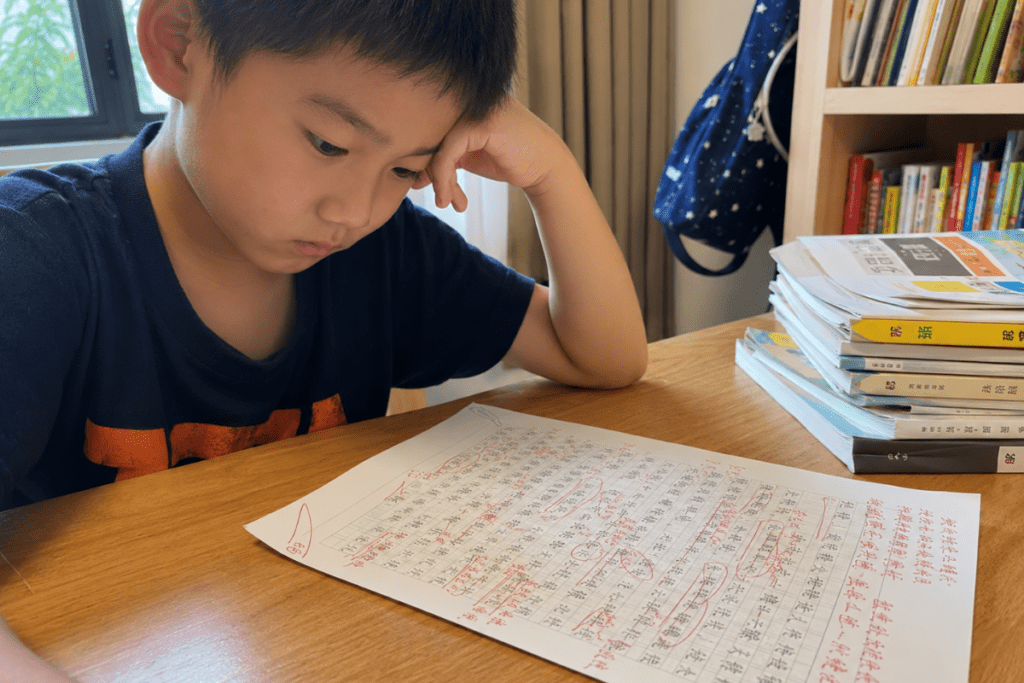
Does your child struggle with Chinese because your family speaks mostly English? Learn why direct translation affects composition and oral, and how clearer guidance can help.
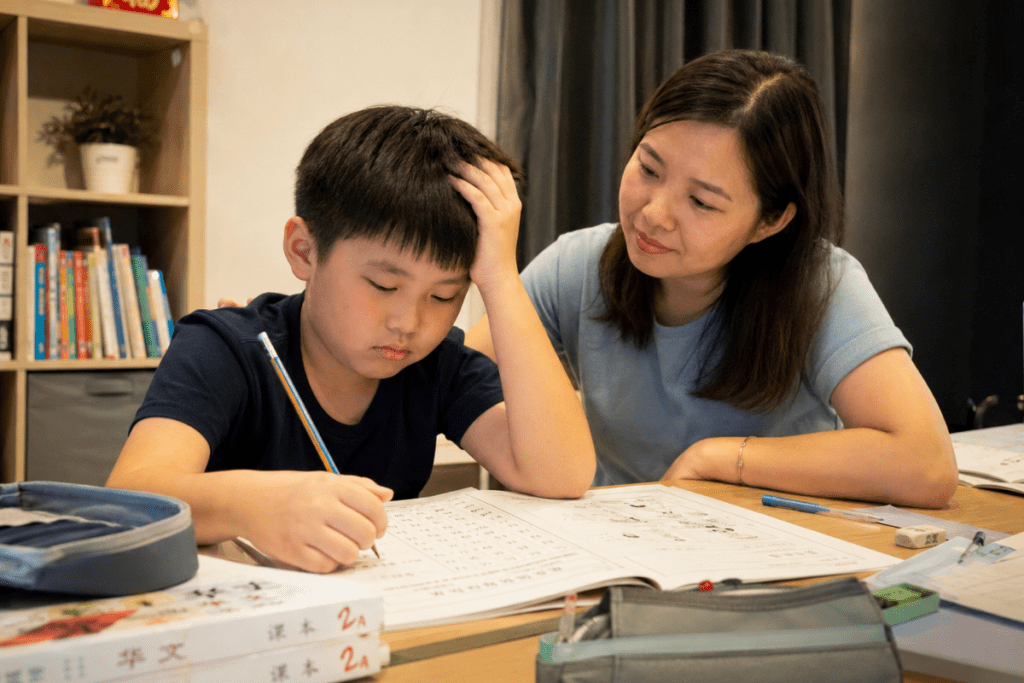
Your child studies Chinese but still cannot improve? Learn why more practice may not be enough and how to identify the real reason behind repeated mistakes.

Looking for Chinese tuition in Singapore? Learn why many children struggle with Chinese and how clearer explanations, better methods, and exam strategies can help.