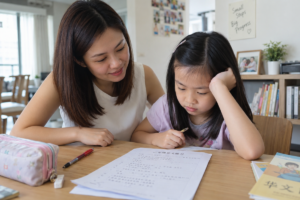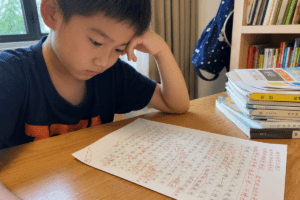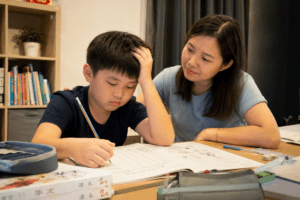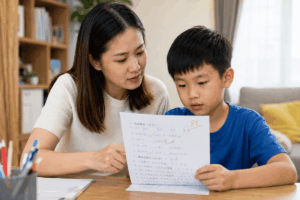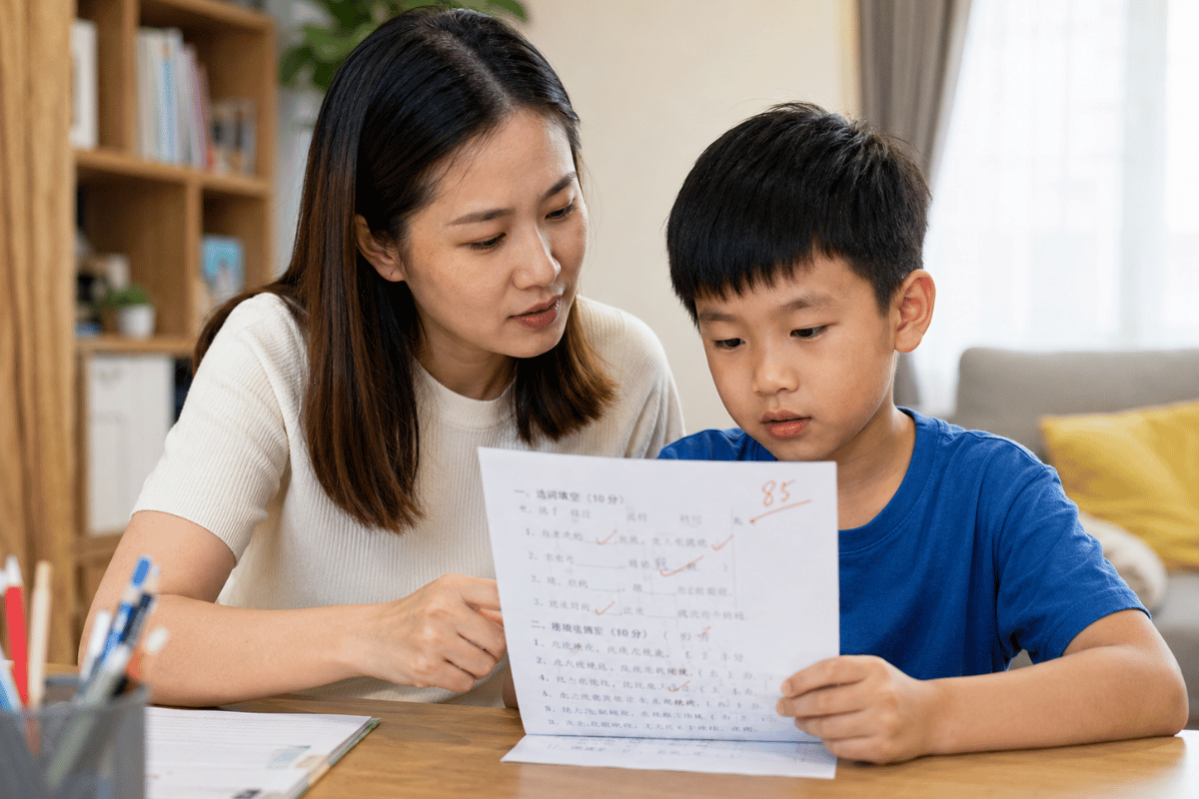
Many parents start searching for Chinese tuition in Singapore when their child begins to struggle with the subject.
At first, the signs may seem small.
Your child takes longer to finish Chinese homework.
They avoid reading Chinese passages.
They keep saying, “I don’t understand.”
They make the same mistakes again and again.
Or worse, they start saying, “I hate Chinese.”
For many Singapore parents, this can be worrying — especially when Chinese becomes more demanding in upper primary, PSLE preparation, secondary school, or Higher Chinese.
But before we assume the child is lazy, careless, or simply “weak in Chinese”, it may be more helpful to ask:
Does my child actually know how to learn Chinese in a way that makes sense to them?
Very often, the problem is not effort. The problem is that the child does not have a clear method.
Why Chinese Feels Difficult for Many Students
Chinese is not just about memorising words.
Students need to recognise vocabulary, understand sentence meanings, read passages, answer comprehension questions, write compositions, speak clearly during oral, and apply phrases correctly.
For children from English-speaking or less Mandarin-speaking families, this can feel even more overwhelming.
A child may know some words, but still not understand the full sentence. They may memorise good phrases, but not know when to use them. They may read the passage, but cannot answer the question properly. They may practise oral, but freeze when asked for their opinion.
This is why doing more worksheets alone may not always help.
Practice is important, but practice without direction can make a child feel even more frustrated.
More Practice Is Not Always the Answer
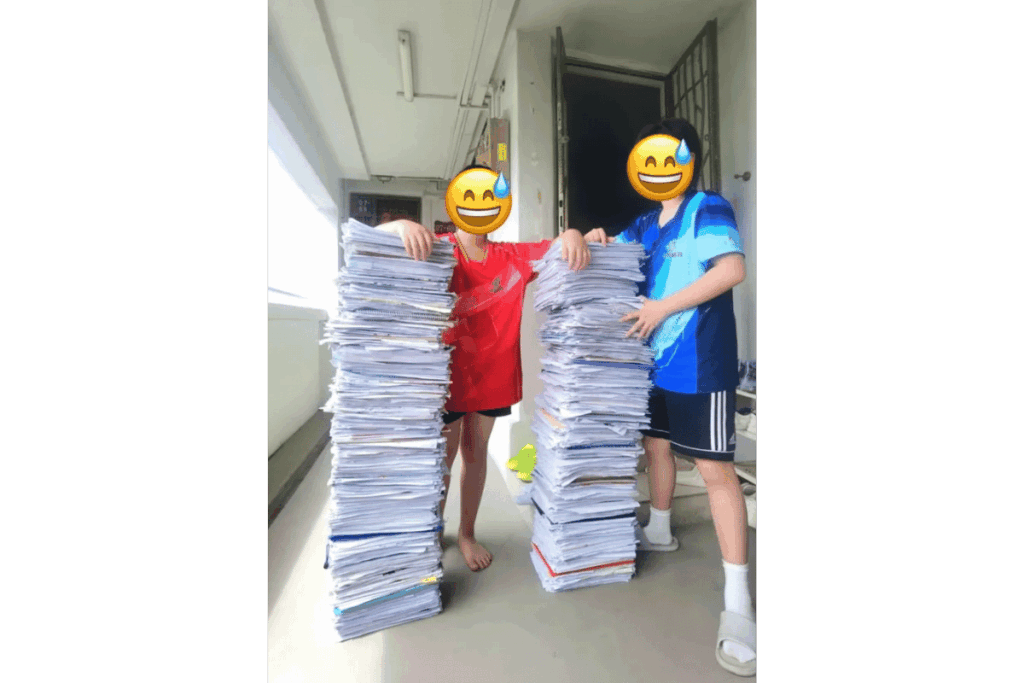
Many parents tell their children:
“Do more practice.”
“Read more Chinese books.”
“Memorise more words.”
“Write more compositions.”
These are not wrong. But if the child does not understand what went wrong, more practice may not lead to better results.
For example, in a comprehension question, a child may write: “因为他很伤心。”
But if the question is asking why the character felt sad, the answer may need to include the full reason, which includes the root cause and the consequence: “因为朋友误会了他,所以他感到很伤心。”
In this case, the child may not have completely misunderstood the passage. The issue is that the answer is incomplete.
This happens very often. A child may know part of the answer, but not know how to phrase it fully enough to score.
Similarly, a child who writes weak compositions may not lack phrases. They may lack story structure. A child who struggles with oral may not lack ideas. They may not know how to organise their answer clearly.
So the real issue is often not “the child did not do enough”.
The real issue may be:
The child does not know exactly how to improve.
What Good Chinese Tuition Should Help With
When choosing Chinese tuition in Singapore, parents should look beyond class timing, location, or the number of worksheets given.
Good Chinese tuition should help the child understand the subject better.
1. Clear explanation
Weak or reluctant learners need explanations they can follow.
If a child already struggles with Chinese, being taught fully in Chinese may sometimes make the lesson harder to absorb. Clear explanation — including English support where needed — can help the child first understand the concept before applying it in Chinese.
This is especially useful for children who do not speak much Mandarin at home.
2. Step-by-step exam strategies
Chinese exam components are not random.
Composition has structure.
Comprehension has question types.
Oral answers can be organised.
Vocabulary can be learned through meaning and usage.
Mistakes can be tracked and corrected.
A useful lesson should help the child walk away knowing:
“This is the kind of question I got wrong.”
“This is why I lost the mark.”
“This is what I should do next time.”
That is when practice becomes more meaningful.
3. Targeted guidance
Every child struggles differently.
One child may be weak in vocabulary.
Another may understand the passage but cannot answer fully.
Another may have many sentence structure errors.
Another may lose confidence when speaking.
Good tuition should help identify the child’s actual gaps, instead of giving every student the same advice.
A Simple Checklist for Parents
Before deciding what support your child needs, ask these questions:
☐ Does my child understand what the Chinese question is asking?
☐ Does my child know why an answer is wrong?
☐ Does my child keep repeating the same mistakes?
☐ Does my child know how to structure oral answers?
☐ Does my child know how to plan a composition before writing?
☐ Does my child know how to revise Chinese effectively?
☐ Does my child feel more confused, stressed, or discouraged over time?
If many answers are “no”, your child may not just need more practice. Your child may need clearer guidance and a better learning method.
How Chinese Is Easy Supports Struggling Learners
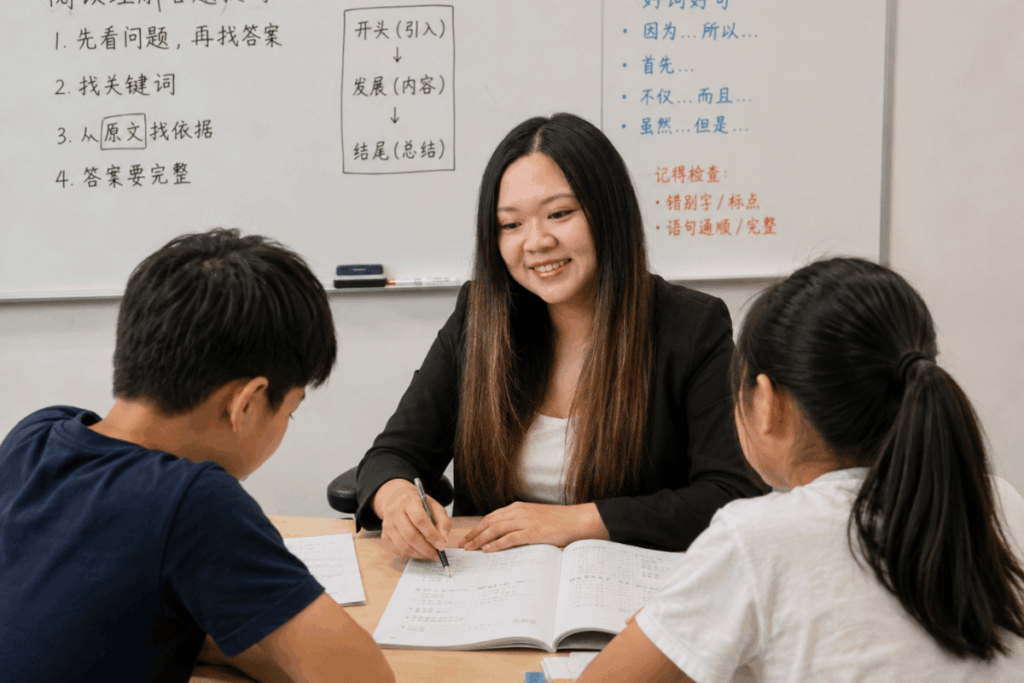
At Chinese Is Easy, we support P3 to S4 students in Chinese and Higher Chinese, especially students who are weak, reluctant, or losing confidence in the subject.
Our belief is that Chinese is as Easy as ABC — not because Chinese requires no effort, but because learning becomes more manageable when students have a clearer way forward.
For us, that means:
A — Aerial Perspective
Students need to see the big picture of Chinese, not just random chapters, worksheets, or memorisation.
B — Bilingual Bridge
Students who struggle with Chinese often need clear English and Chinese explanations, so they can first understand, then apply.
C — Clear Exam Strategy
Students need to know how to answer, revise, avoid repeated mistakes, and score more confidently.
The goal is not to force every child to love Chinese immediately.
The first step is to help the child feel:
“I understand this better now.”
“I know what to do next.”
“Maybe Chinese is not impossible.”
When students understand better, they become more willing to try. When they know how to answer, they feel less afraid. When they see small improvements, confidence can slowly return.
Final Thoughts
Finding the right Chinese tuition in Singapore is not just about adding another class to your child’s schedule.
It is about helping your child find a clearer way to learn Chinese.
If your child is struggling, avoiding Chinese, or losing confidence, it may not mean they cannot improve. It may simply mean they need clearer explanations, a better method, and guidance that fits their needs.
A good starting point is to look at one recent worksheet or test paper and ask:
Where exactly were the marks lost?
Was it understanding, expression, technique, or confidence?
What is one thing my child can do differently next time?
Once the gap is clearer, improvement becomes less overwhelming.
That is the heart of Chinese Is Easy: helping students see that Chinese can become clearer, more manageable, and step by step, easier.
Not sure why your child is struggling with Chinese?
Start by identifying the real gap.
At Chinese Is Easy, we help students understand where they are losing marks and guide them with clear explanations, bilingual support, and structured exam strategies.
A good first step is to review your child’s recent Chinese work and find out what is really holding them back.
FAQ
What type of Chinese tuition is suitable for weak students?
Weak students usually need tuition that explains clearly, identifies their gaps, and teaches step-by-step strategies. More worksheets alone may not help if the child does not understand why they are losing marks.
Can my child improve in Chinese if we do not speak Mandarin at home?
Yes. Children from English-speaking or less Mandarin-speaking families can still improve. They may need clearer explanations, regular practice, and a bilingual bridge to help them understand Chinese concepts before applying them.
When should my child start Chinese tuition?
Parents may consider Chinese tuition when the child starts losing confidence, struggles to understand schoolwork, keeps making the same mistakes, or needs more structured exam preparation.